
INTRACELLULAR HYPERCALCINOSIS: 20 years later, this remains a topic of major and emerging importance
Let’s talk about five pathways by which increased intracellular calcium promotes disease, then let’s talk about THE SOLUTIONS to this common problem

Toward the end of one of my recent videos (LINKED HERE and below) I mentioned an update to my diagram explaining the clinical importance of elevated intracellular calcium. You can also see more discussion of this toward the end of this weekend’s video “Medical Paradigm vs Drug Paradigm: Emerging Patterns in Dietary Supplement Use Among US Adults, 1999-2023.”
Let’s talk about 1) five pathways by which increased intracellular calcium promotes disease, then let’s talk about 2) THE SOLUTIONS to this common problem
This article was originally published in Naturopathy Digest in 2006 and later reprinted in Inflammation Mastery 4th Edition:
Bookstore links: Amazon.com: paper and digital ebooks—immediate download! Barnes and Noble.com: paper and digital ebooks ThriftBooks AbeBooks BetterWorldBooks WaterStonesBooks
Sample PDF downloads: Click here to see the cover. Click here to see the first few pages, including the table of contents and index (size: 6 MB). Click here for a larger sample with photos (size: 43 MB). DOWNLOAD a *free* sample of Inflammation Mastery 4th Edition here via the *free* Kindle software from Amazon.
Introduction:
Let us explore the possibility that elevated levels of calcium within the cell (intracellular hypercalcinosis) might predispose toward a wide range of clinical problems including migraine, hypertension, myofascial trigger points, inflammation, and cancer. Further, let’s review the data showing that several commonly employed nutritional interventions can be used synergistically to counteract and correct this problem. By the time readers complete this article, they will have 1) an understanding of this problem, 2) a protocol for how to correct this problem, and 3) be able to explain the biochemical rationale for using these nutritional protocols in patients who might otherwise be treated with drugs in general and calcium-channel-blocking drugs in particular.
Although prescription drugs are often used by medical doctors in a “willy-nilly manner” (according to Harvard Medical School Professor Dr. Jerry Avorn[1]), let’s assume for a moment that legitimate reasons exist for the widespread use of drugs that block calcium channels in cell membranes—the “calcium-channel-blocking drugs.” Although it is counterintuitive to promote health by interfering with the body’s natural function, calcium-channel-blocking drugs are routinely used in pharmaceutical medicine for a broad range of problems including hypertension, heart rhythm disturbances, bipolar disorder, and anxiety/panic disorders. Widespread medical use of calcium-channel-blocking drugs appears to validate the supposition that excess intracellular calcium is an important contributor to these and perhaps other problems. Therefore, if intracellular hypercalcinosis is the problem, then any safe and cost-effective treatment that can correct this problem should be met with the same widespread acceptance given to calcium-channel-blocking drugs, which are universally accepted and utilized in the allopathic “conventional medicine” society. At the very least, we can generally state that all phenomena that contribute to calcium deficiency result in an increase in intracellular calcium levels (the “calcium paradox”) due to the effect of parathyroid hormone, which specifically promotes calcium uptake in cells while mobilizing calcium from bone. Additionally, a few other nutritional influences (such as fatty acid imbalances) modulate cellular calcium balance, and these will be discussed in the section on clinical interventions.
The Problem of Excess Intracellular Calcium:
Although the current author is the first to coin the phrase “intracellular hypercalcinosis”, several other authors have pointed to the problem of the “calcium paradox” and the means by which body-wide calcium deficiency can result in intracellular calcium overload, which triggers a cascade of events leading to adverse health effects. Most notably, the work of Takuo Fujita[2],[3] stands out in its clarity and specificity in linking intracellular hypercalcinosis with disorders such as hypertension, arteriosclerosis, diabetes mellitus, neurodegenerative diseases, malignancy, and degenerative joint disease.
Mechanisms by which intracellular hypercalcinosis contributes to disease have been defined, at least partially. However, we must remember that nutritional disorders never occur in isolation, and that the effects of intracellular hypercalcinosis observed clinically are overlaid with manifestations of the primary nutritional/metabolic disorder. Stated differently, contrary to what the pharmaceutical paradigm’s monotherapeutic use of calcium-channel-blocking drugs would imply, intracellular hypercalcinosis never occurs by itself. For example, if intracellular hypercalcinosis is contributed to by vitamin D3 deficiency, then some of the observed clinical complications of that condition are due to and yet independent from the excess intracellular calcium since the primary problem (vitamin D3 deficiency) causes adverse effects and deficiency symptoms that are independent of its effect on intracellular calcium levels. To better understand the specific effects of excess intracellular calcium, a brief review of a few specific biochemical/physiologic mechanisms by which intracellular hypercalcinosis can contribute to disease is warranted. We must start by realizing that calcium is much more than a “bone nutrient” and that it functions as an electrolyte, intracellular messenger, and regulator of cell replication and metabolism.
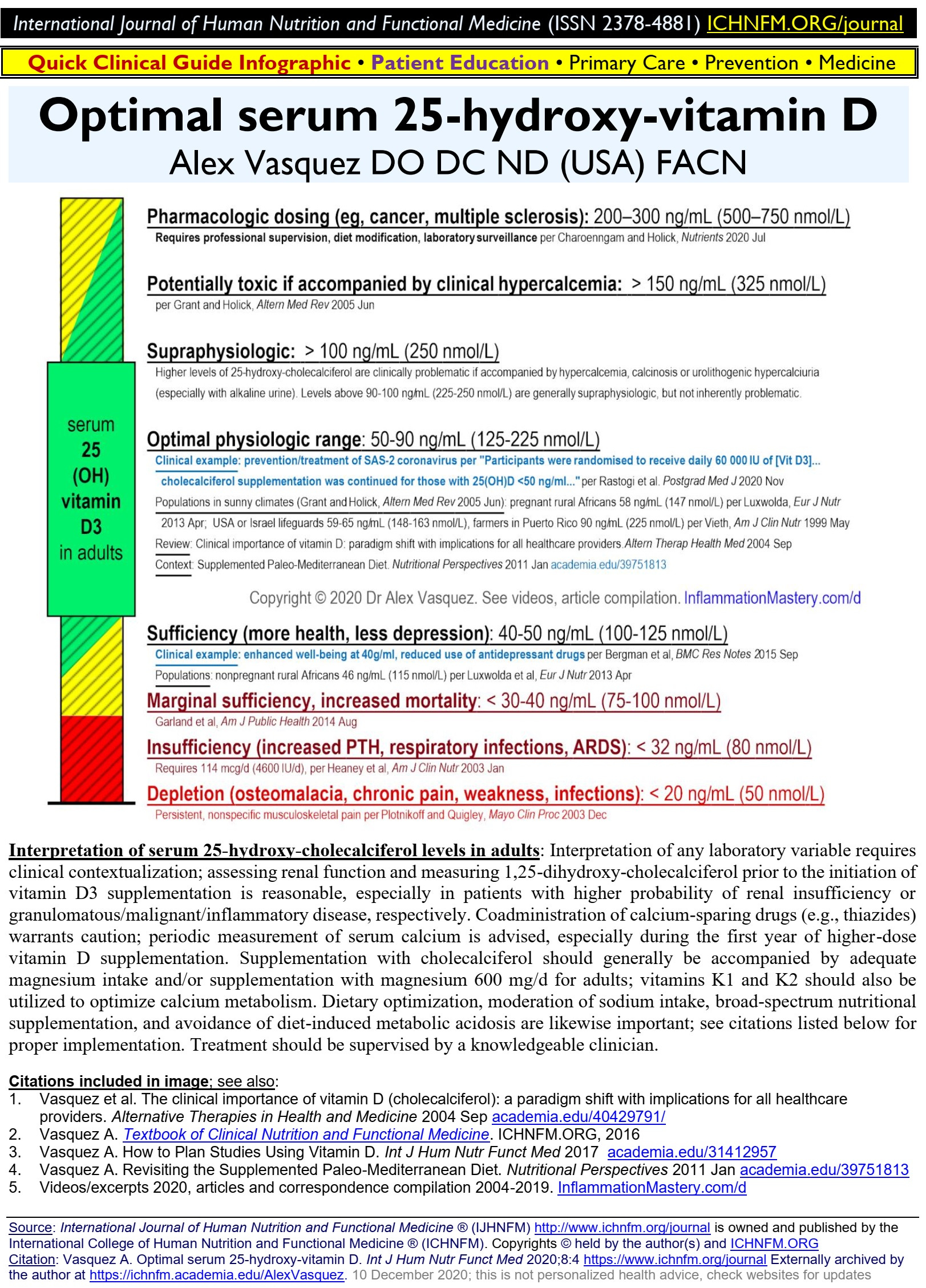
Here, you can download a PDF compilation of most of my publications related to vitamin D

Let’s talk about five pathways by which increased intracellular calcium promotes disease:
1. Adverse effects on membrane receptors and intracellular transduction: The concentration of extracellular calcium exceeds the concentration of intracellular calcium by a ratio of 10,000 to one. When intracellular calcium levels rise even slightly, receptors and messaging systems in the cell membrane fail to function optimally. Thereby, increased intracellular calcium can predispose to insulin resistance (via interference with insulin receptors) and can promote neurodegeneration by amplifying the intracellular cascade of effects that follows activation of the brain’s NMDA-receptors (excitoneurotoxicity). More specifically, we must note that the recently discovered “calcium-sensing receptor” (CaR, a G protein-coupled plasma membrane receptor) senses minute alterations in serum calcium levels and then ultimately translates these variations into changes in cellular function, notably alterations in cell replication (think cancer) and eicosanoid production (think inflammation).[4],[5] Given that CaR are found in a wide range of cell types, including those found in bone, the kidneys, and immune system, we can see a pathway by which alterations in calcium balance could be implicated in a wide range of diseases. CaR-mediated alterations in cell function are likely to be complicated by disorders of vitamin D3 nutrition and metabolism (that commonly complicate disorders of calcium homeostasis), which affect an even wider range of cell types including those of the breast, prostate, ovary, lung, skin, lymph nodes, colon, pancreas, adrenal medulla, brain (pituitary, cerebellum, and cerebral cortex), aortic endothelium, and immune system, including monocytes, transformed B-cells, and activated T-cells. This is an example of the complexity involved in understanding nutrition in general and the effects of nutritional deficiency (always multifaceted) in particular.

