

Article review (part 1 of 2) Evidence-based recommendations for optimal dietary protein intake in older people; VIDEO review above and PDF article provided below of the following citation:
CITATION: Evidence-based recommendations for optimal dietary protein intake in older people: a position paper from the PROT-AGE Study Group. J Am Med Dir Assoc. 2013 Aug;14(8):542-59
ABSTRACT: New evidence shows that older adults need more dietary protein than do younger adults to support good health, promote recovery from illness, and maintain functionality. Older people need to make up for age-related changes in protein metabolism, such as high splanchnic extraction and declining anabolic responses to ingested protein. They also need more protein to offset inflammatory and catabolic conditions associated with chronic and acute diseases that occur commonly with aging. With the goal of developing updated, evidence-based recommendations for optimal protein intake by older people, the European Union Geriatric Medicine Society (EUGMS), in cooperation with other scientific organizations, appointed an international study group to review dietary protein needs with aging (PROT-AGE Study Group). To help older people (>65 years) maintain and regain lean body mass and function, the PROT-AGE study group recommends average daily intake at least in the range of 1.0 to 1.2 g protein per kilogram of body weight per day. Both endurance- and resistance-type exercises are recommended at individualized levels that are safe and tolerated, and higher protein intake (ie, ≥ 1.2 g/kg body weight/d) is advised for those who are exercising and otherwise active. Most older adults who have acute or chronic diseases need even more dietary protein (ie, 1.2-1.5 g/kg body weight/d). Older people with severe kidney disease (ie, estimated GFR <30 mL/min/1.73 m(2)), but who are not on dialysis, are an exception to this rule; these individuals may need to limit protein intake. Protein quality, timing of ingestion, and intake of other nutritional supplements may be relevant, but evidence is not yet sufficient to support specific recommendations. Older people are vulnerable to losses in physical function capacity, and such losses predict loss of independence, falls, and even mortality. Thus, future studies aimed at pinpointing optimal protein intake in specific populations of older people need to include measures of physical function.
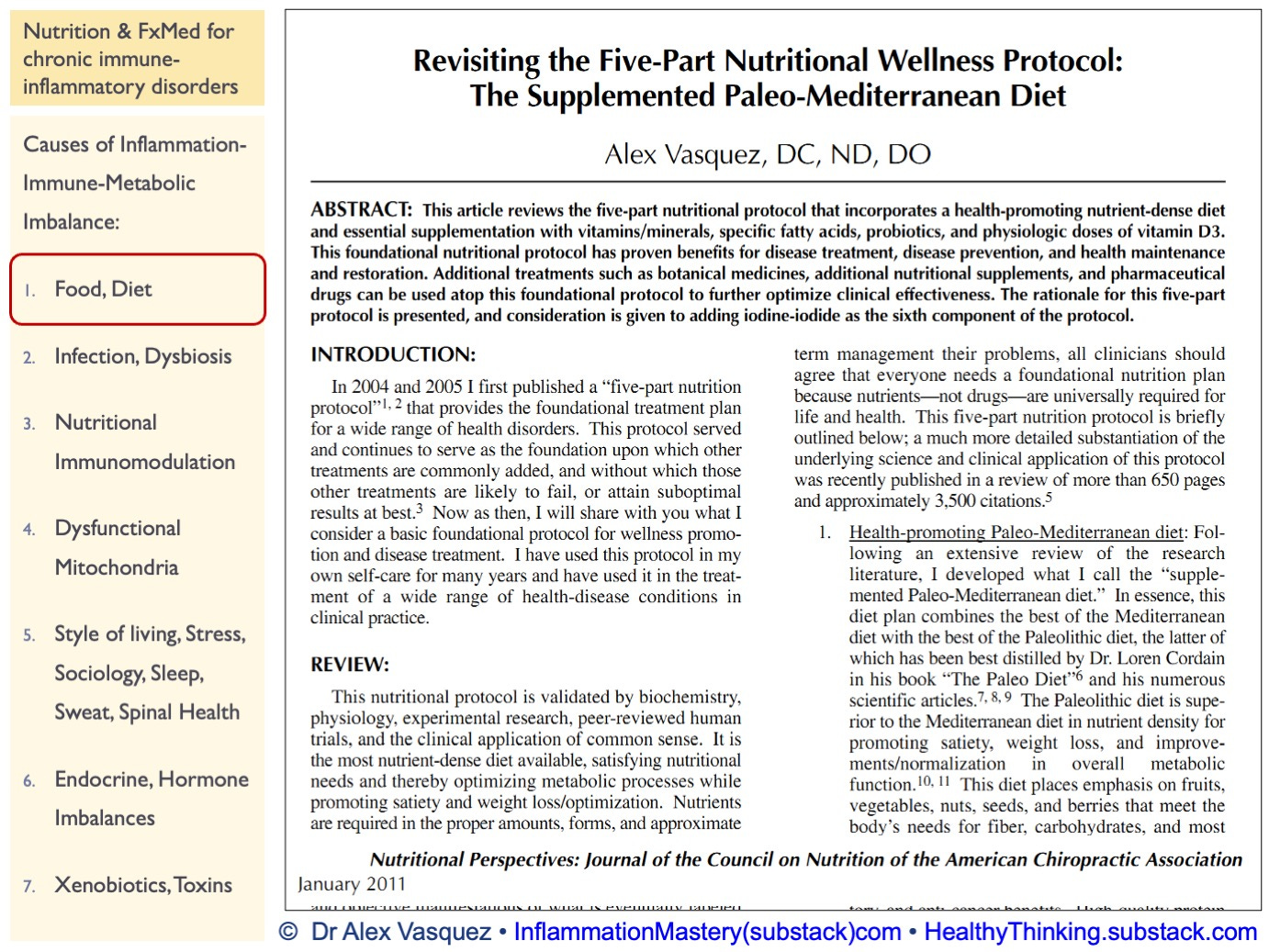
This is a series of articles/videos on the dietary protein component of my 5-part PaleoMediterranean Diet:
Part 1 VIDEO: Overview, history, and 1-hour conference presentation (video, linked here and below)
Part 2 VIDEO: The eight (8) major considerations in the conversation on dietary protein (video, linked here and below)
Part 3: Dietary Protein: Spanish sardines, cheese, pesto, and coffee
Part 4: Low-protein diets cause losses of body cell mass, muscle function, and immune response
Part 5 VIDEO: Cheese, other common milk-based foods such as kefir and yogurt; accessory nutrients and bioavailability
Part 6 VIDEO: pH alkalinization problems with Ketogenic and High-Protein Diets
this page: Dietary Protein pt7: Article review (part 1 of 2) Evidence-based recommendations for optimal dietary protein intake in older people
PDF article provided below: Evidence-based recommendations for optimal dietary protein intake in older people: a position paper from the PROT-AGE Study Group. J Am Med Dir Assoc. 2013 Aug


