

The legitimate “Jarisch–Herxheimer reaction” classically follows antibiotic (eg, first with mercury, then with penicillin) treatment of syphilis as a result of microbial debris from dead bacteria triggering a systemic inflammatory response, which can range in severity from mild to life-threatening.
Later and as expected, “Herxheimer reaction” was applied more loosely to reactions following other treatments for other infections, and was appreciated to have several variants, depending on how loosely or strictly one wishes to apply language. Also as expected, the term has been misapplied and is therefore at risk of losing its meaning, especially among overly casual “influencer”-level conversations.
See my previous discussions and linked resources in the following 4 pages for more information.


![Dysbiotic Relationships, Herxheimer, and the Skilled Use of Antibiotic Drugs: Part 2 + my video from the 2013 International Conference on Human Nutrition and Functional Medicine [ICHNFM]](https://substackcdn.com/image/fetch/$s_!tHjT!,w_140,h_140,c_fill,f_webp,q_auto:good,fl_progressive:steep,g_auto/https%3A%2F%2Fsubstack-video.s3.amazonaws.com%2Fvideo_upload%2Fpost%2F193591509%2Fbd1eee7a-4ab2-40d1-96c5-2dd9f366d588%2Ftranscoded-00622.png)
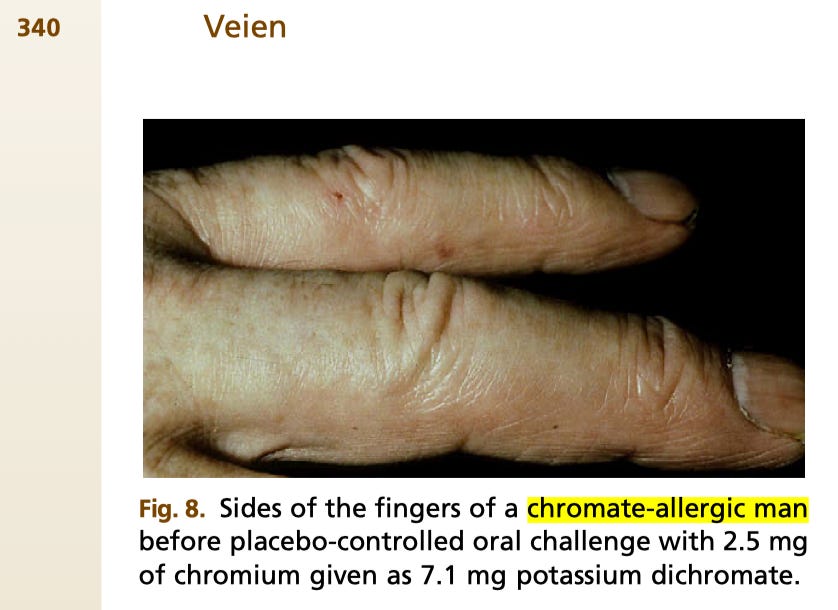
Interface Dermatitis, the ID reaction—another face of the Herxheimer-type “die-off” reaction
I personally have experienced at least two events of Interface Dermatitis (ID reaction), first following poison ivy/oak exposure, and second this past week following antibiotic treatment for early sinusitis. Both of these are discussed in the video excerpt above.
Since this topic is unknown to most patients and doctors, I have included several (impressively lackluster) PDF articles below, but again I think my casual coverage of this topic in the video excerpt above is plainly sufficient.

In the video excerpt above, I talk about my recent experience with the interface dermatitis (ID) reaction while en route to my detailing of intracellular calcium—stay tuned for the complete video.
Can you ANSWER me 8 questions with 12 answers on INTRACELLULAR CALCIUM?
Describe the physiological roles of intracellular calcium (iCalcium, iCa).
__________________________________________
Describe the pathophysiological roles of intracellular calcium.
__________________________________________
What is the main molecular trigger for the cellular entry of calcium?
__________________________________________
How is the main molecular trigger for the entry of calcium converted to its opposite?
__________________________________________
What is the main biochemical requirement for this conversion?
__________________________________________
Name the two requirements for the requirement (answer) for question no5 above, ie what are the cofactors and coenzymes for no5 above?
__________________________________________
__________________________________________
What single characteristic distinguishes physiologic from pathologic iCalcium?
__________________________________________
Name the 4 main “areas” or “relocations” for iCalcium
__________________________________________
__________________________________________
__________________________________________
__________________________________________
INTRACELLULAR HYPERCALCINOSIS: 20 years later, this remains a topic of major and emerging importance

Toward the end of one of my recent videos (LINKED HERE and below) I mentioned an update to my diagram explaining the clinical importance of elevated intracellular calcium. You can also see more discussion of this toward the end of this weekend’s video “


